
|
|
| Home Previous Next | |
|
|
The HolidaysThursday, 4 January 2001Just after I arrived back in town from Byrd Camp, it was time for Thanksgiving. The galley people do a wonderful job of putting together a feast. Last year there was a tremendous amount of food and it was all very good. This year, however, my friends from the Long Duration Balloon Program out at Williams Field invited me to have Thanksgiving dinner with them. One of the science teams who will have an experiment flying on one of the balloons is from LSU in Baton Rouge, Louisiana. They brought all the fixings down here for Cajun fried turkeys. They brought a big fryer and then built a snow wall outside as a shelter for it. The skua birds were right there hoping for handouts, but of course it is against the Antarctic treaty for us to feed them. 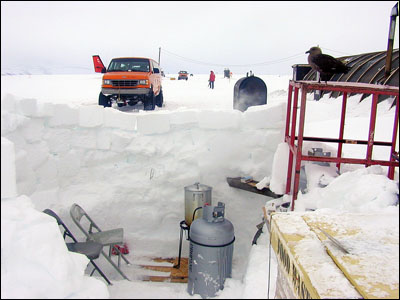
The turkeys tasted divine. Only about 40 people were out there so it was a delightful group of good friends. 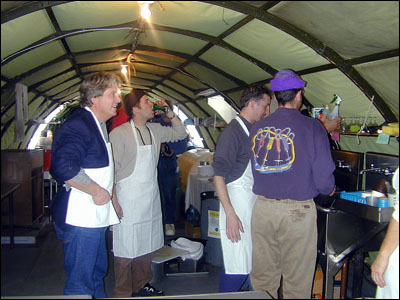
Most of December has been filled with long overtime hours. We had a big project to finish under a deadline. The gym building and the helicopter hanger have never had water or sewer lines attached to them. One project this summer was to finally supply them with water and sewer. They built two bathrooms on the front of the gym and we had to supply it with power, lights, etc. However, the biggest part of the project was to put heat trace on all of the water and sewer pipes leading to the building — about 3,000 feet of pipes. 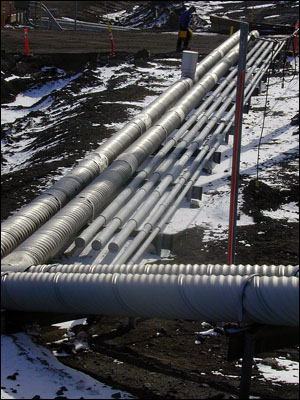
Water and sewer lines down here are run inside something called bondstrand, which is well–insulated pipe that has a conduit already run through the insulation. We have to run heat trace through all of that conduit. Heat trace is a cable that heats up and keeps the pipes from freezing. That job became a rush job and we ended up working until midnight for several days trying to finish it. Of course the job is all outside and many conduits had to be run to supply the power. It was an enormous job. We no sooner finished that job and were looking forward to maybe getting a little time off after putting in all that overtime, when the transformer to building 155, our main building, blew out. That happened around five in the morning and we worked a couple of days trying to get power back to that building. 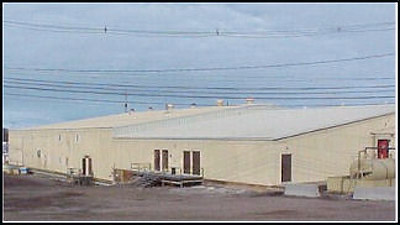
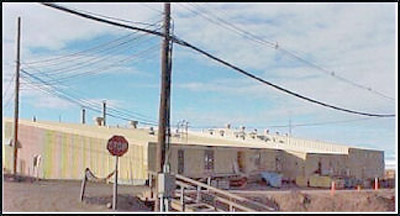
Building 155 is the building that houses the galley, finance, the barber shop, the store, the radio and television stations and many other things. To lose power to that building can be pretty devastating to the town. We had a generator brought in and rewired some things just to get some basic power for the freezers and such. After that we started putting in a new transformer. We did not have a transformer to match the old one, so we had to put in a large one outside the building. 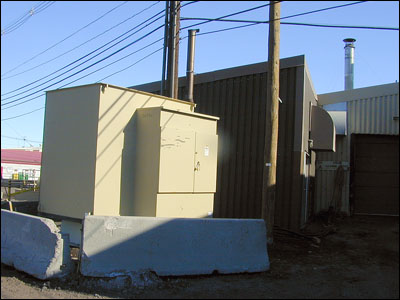
It took several days to get full power back to the building. We did have the kitchen powered up within 24 hours. I have to say that the kitchen staff did a remarkable job at keeping everyone well fed during the crisis, despite the fact that they were not able to cook anything. Christmas was hectic as well. Typically for me, I was frantic trying to finish everyone's Christmas presents. I tried to get some little something for all the people I work with and my friends out at LDB . They gave us Christmas eve and Christmas day off so we were all really looking forward to having two days off. After work on the 23rd I packed a bag and headed out to Williams Field. It was really pleasant being out of town for the weekend. They had a big dinner planned for Christmas Eve. We started the day by cutting snow blocks and building another big snow wall to shield the barbecue. 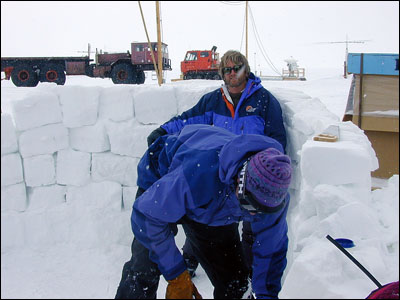
We grilled steaks and had enormous crab legs, as well as vegetables and breads and things. I had also come out a couple of weeks ago and made some of our family eggnog. One of the pilots brought us some real milk and cream from New Zealand. Another of the guys who is out here all the time, Mark, volunteered to help and to make sure it got mixed every day. By Christmas eve it was ready and everyone really seemed to enjoy it. 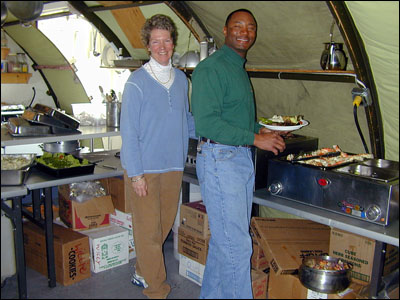
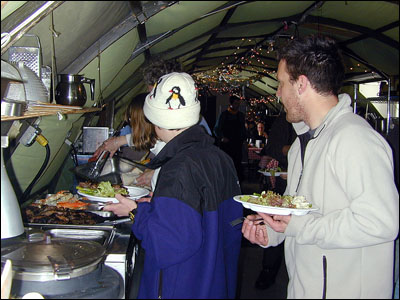
Before the grill died down, Mark made a marshmallow roasting stick out of some bamboo and we roasted marshmallows. We only have the miniature marshmallows down here so it was a lot of effort for a little pay off. Still, it was great fun. 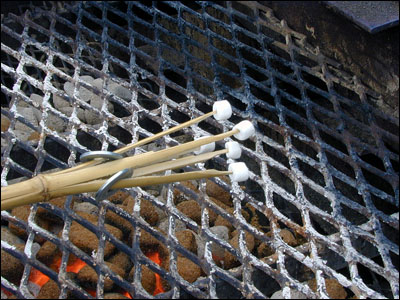
Christmas morning we got up and opened presents. That was great fun. Then we went to the jamesway and cooked a big brunch — bacon, sausage, eggs, etc. The weather looked a little promising and for a little while we thought we might have a Christmas day balloon launch, but it did not hold. We planned Christmas dinner for 2 P.M. We had fried turkeys again, ham, dressing, many vegetables, etc. And eggnog of course. Most people got all dressed up so that was quite delightful. 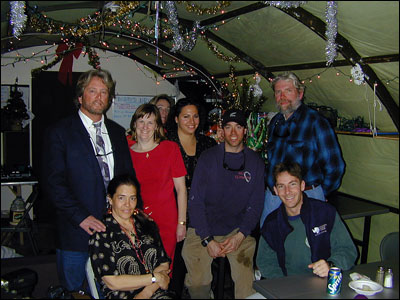
I had on a summer dress with high heels. It was actually warm enough to be outside even in those clothes. 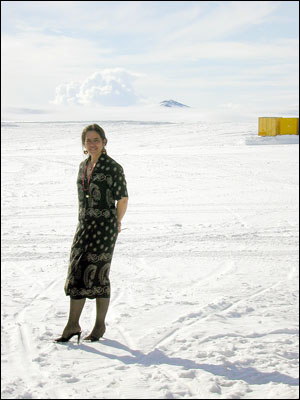
Our friend Trudy, the pilot, also brought us some fresh flowers from New Zealand. What a lovely treat that was. 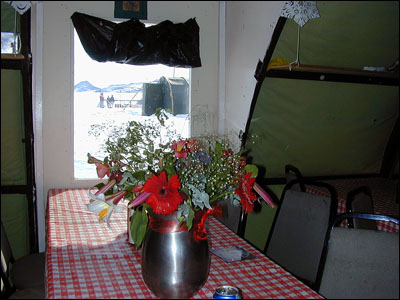
The LDB (Long Duration Balloon) people have been trying to launch the first balloon since around the middle of December. The first payload is the Advanced Thin Ionization Calorimeter (ATIC) from LSU (Louisiana State University). This payload will study Cosmic Rays, a form of high–energy matter which comes from other parts of our galaxy or somewhere else in the universe. The balloon will take the payload above the earth's atmosphere and allow the scientists to detect the cosmic rays in space. Cosmic rays observed in these conditions can be 10 million times more energetic than those produced in the greatest of particle accelerators on earth. Finally on 28 December the weather started looking good for a launch. They took the payload out of the big barn area and started making their way out to the launch site. 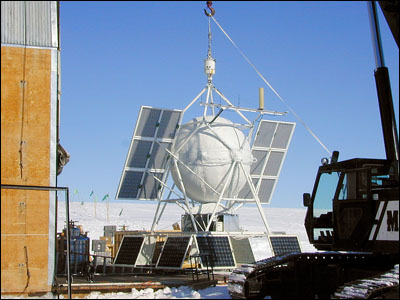
At the same time, the balloon people started laying out the balloon. They hooked it up to the payload and began inflating it with helium. 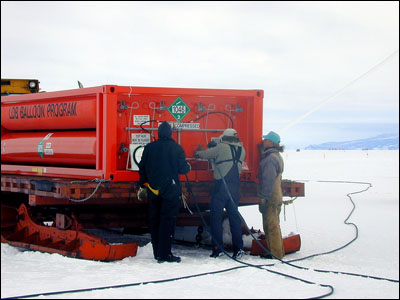
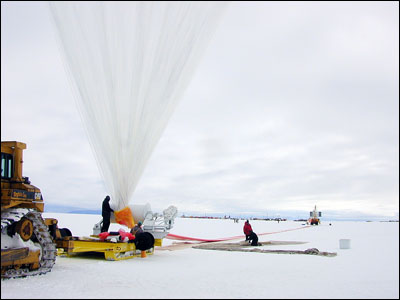
The whole process takes several hours. 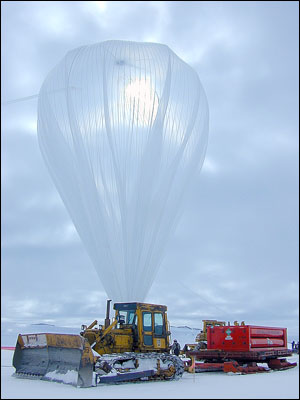
Finally it was inflated as much as was needed. The balloon is enormous on the ground — almost a thousand feet long, and as it rises to altitude it expands more and more until it is slightly more than 500 feet in diameter. When it finally had the right amount of helium, they released the spool and up it went. 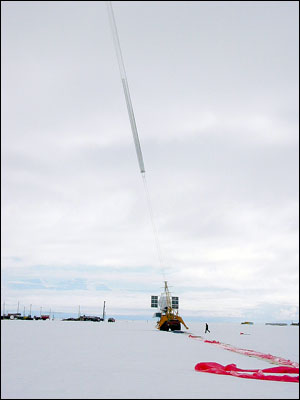
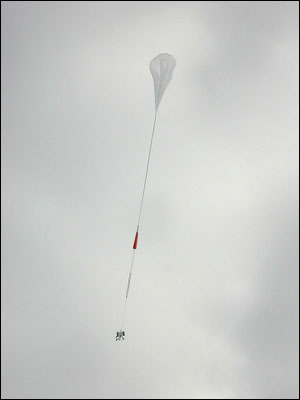
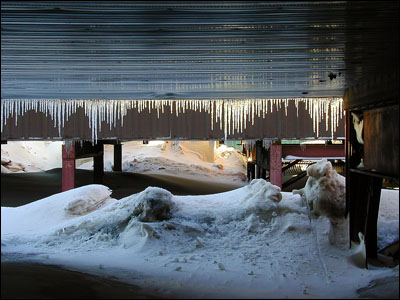
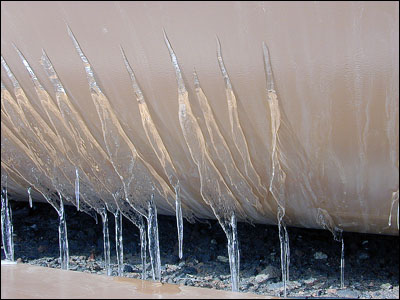
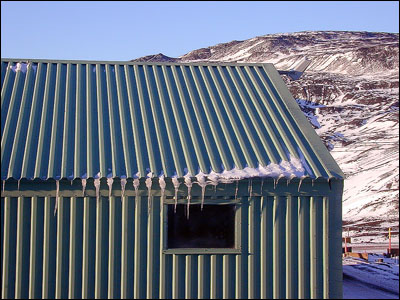
The payload weighs 3,300 pounds. It took the balloon around two hours to reach its cruising altitude of 120,000 feet above the earth. There it will follow the circumpolar winds and circle the continent in approximately 10–14 days. If you would like to follow the balloon's path as it circumnavigates the continent, check out the NSBF web page. If you would like to take at live look at McMurdo Station, there is a webcam set up in town [which was dismantled sometime later]. It is in the main intersection so you might be able to see a little of what goes on. There is another webcam located on one of the hills above McMurdo. With the summer weather, all the snow is rapidly melting. The streets have become rivers of mud and the snow melting off all the rooftops has formed some amazing icicles. I love to look at them and to see all the different forms they make. 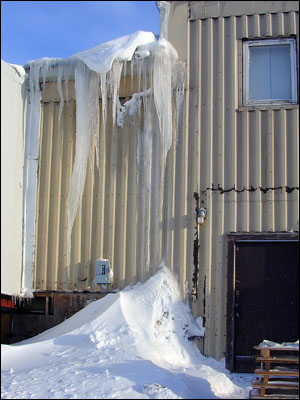
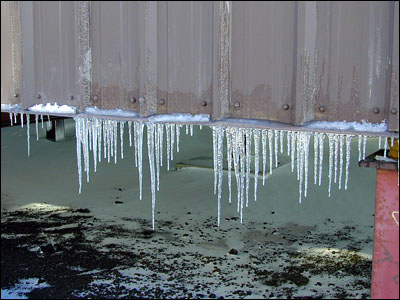
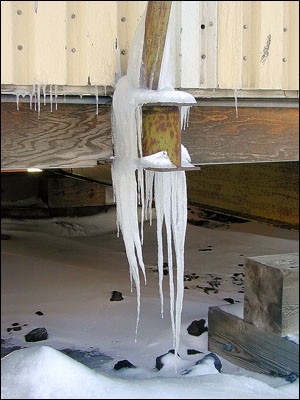
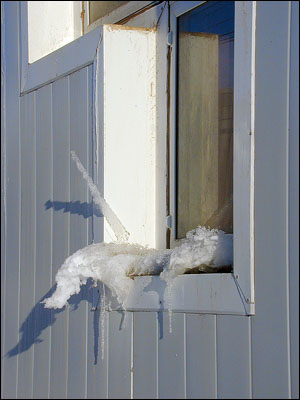
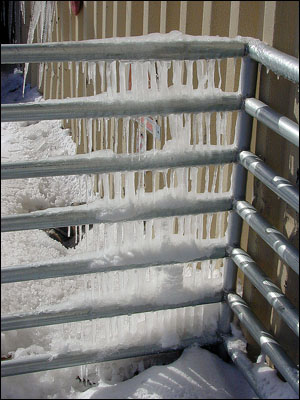
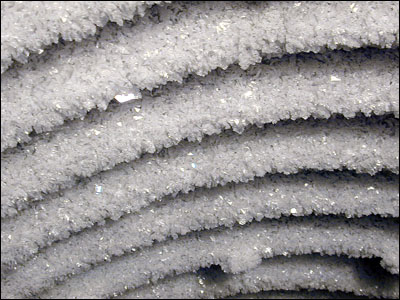
Another beautiful feature is where the ice shelf and the land come together. The movement of the ice as well as the tides underneath cause pressure ridges as it pushes against the edges of the land. From a distance they look like frozen waves. And up close they make the most amazing formations. 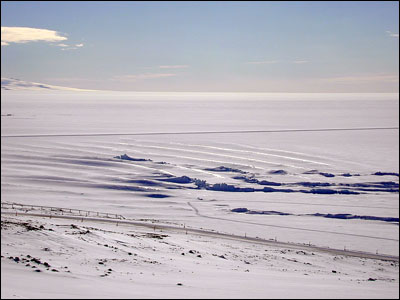
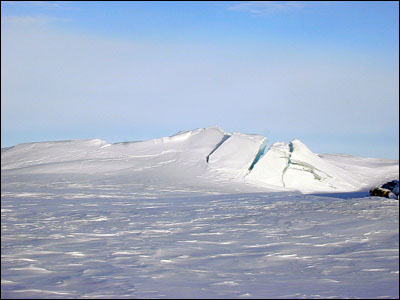
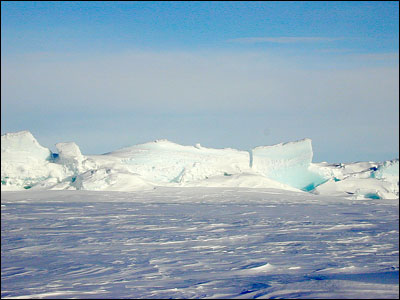
None of the vehicles down here have to have license plates as we are just in sort of a camp rather than a town. Several people bring license plates from other places, so I brought down a licence plate from my old car. It is funny to me to see the Florida plate with all the snow and ice on it. 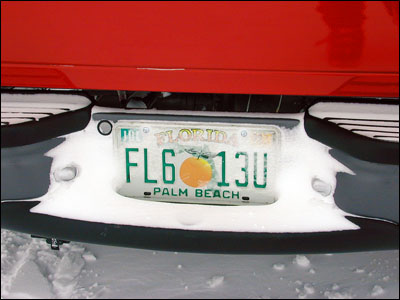
|
|
| Home Previous Next | |
|
|

|
|
|
|
|
Irma Hale McMurdo Station, Antarctica E-mail: Copyright © Irma Hale. All
Rights Reserved. Free counters provided by Vendio. |
|
|



